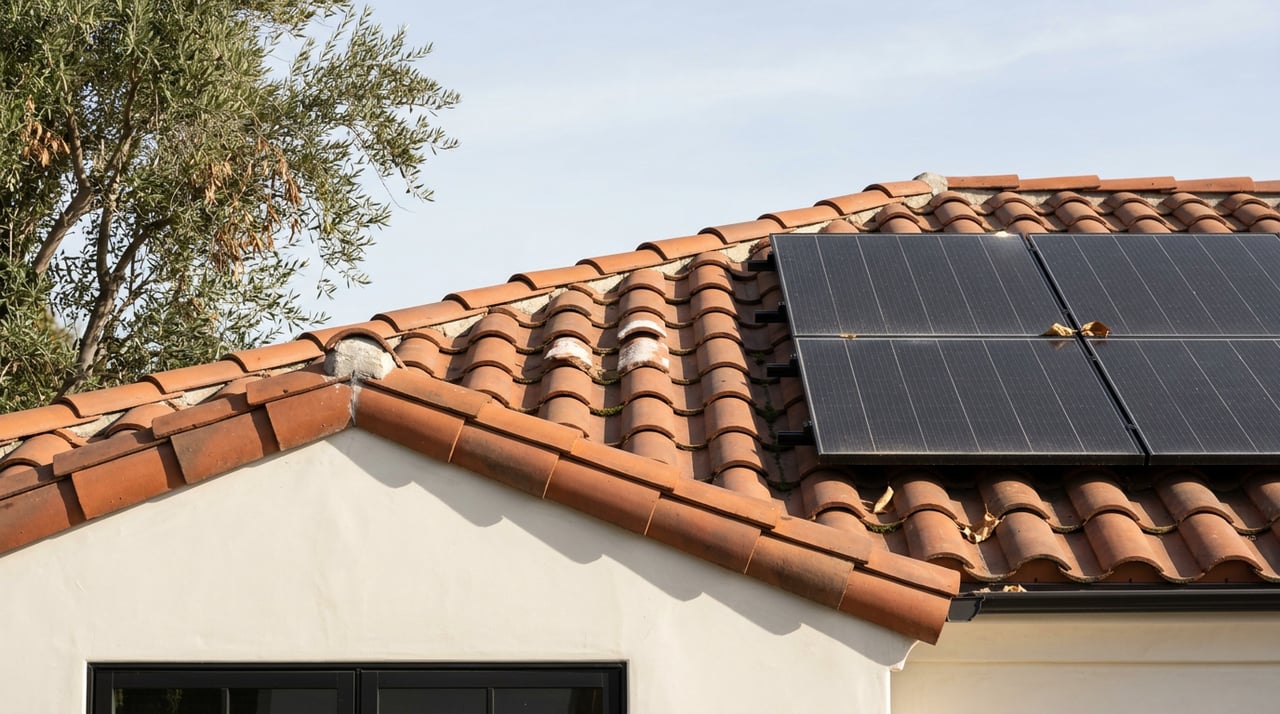
Scan enough resale listings in Orchard Hills and a pattern shows up fast. Sellers keep specifying that their solar panels are owned, sometimes counting them, sometimes noting the system is fully paid off. Agents do not add that detail because it sounds nice. They add it because in Orchard Hills, unlike the panels themselves, ownership is not something a buyer can assume.
Every home in the village has solar panels. What a listing tells you when it specifies "owned" is who actually holds title to that equipment, and that single distinction changes what happens at your closing table more than almost any other line in the disclosure packet.
A Neighborhood Where Every Builder Made a Different Call
Orchard Hills was never built by one company running one solar program. Toll Brothers developed The Groves. Brookfield Residential built the Vista neighborhood inside The Summit. Shea Homes floor plans elsewhere in the village carry SheaConnect smart home branding. The Irvine Company has kept releasing new phases since, most recently Neighborhood 4, a roughly 250-acre parcel where site work began in late 2021 and the developer's published timeline called for first homes to reach the market in 2025. Each builder, and often each individual buyer inside a builder's program, chose separately whether to fold the solar system into the purchase price as an owned asset or hand it off through a lease or power purchase agreement with a third-party provider.
Production builders elsewhere in Irvine put that choice in writing. KB Home's fine print for its Irvine communities states plainly that solar is not included in the posted price and may be leased for a monthly payment or purchased for an additional cost that can be rolled into financing. That same either-or decision played out, one buyer at a time, across every Orchard Hills phase going back to its earliest neighborhoods. Homes from those original years are exactly the vintage reaching resale now, which means the ownership question sits inside a real slice of current inventory rather than an occasional exception.
What a Lease Does Once You're in Escrow
A leased system or a power purchase agreement works differently, and the difference lands at the two moments where a transaction can slow down or fall apart.
The first is the appraisal. Fannie Mae's underwriting guidance does not allow leased or PPA solar equipment to count toward the appraised value of the house, because the buyer is not actually purchasing that equipment. A seller who priced the home as if the panels added value is pricing in something the buyer's lender will not recognize.
The second is the transfer itself, which can run on its own clock. Most providers look for a credit score somewhere around 680 or higher before approving an assumption. Some turn the paperwork around in a matter of days. Others report underwriting queues that stretch into weeks. Nobody, including the listing agent, can promise a number until the specific provider is contacted, which is exactly why that call needs to happen in the first week of escrow rather than the last.
| Owned solar | Leased or PPA solar | |
|---|---|---|
| Typical transfer timeline | None | Days to several weeks, provider dependent |
| Buyer credit check | Standard mortgage underwriting only | Separate check, often 680+ expected |
That gap also creates leverage that most buyers do not realize they have. If a system turns out to be leased later in the process, a buyer can reasonably ask for a seller-funded buyout, a price credit, or more time in the contingency period. Sellers who get ahead of the question keep that leverage off the table entirely.
The Buyout Window Sellers Often Miss
A seller carrying a lease is not stuck with a single path forward. Most solar leases and power purchase agreements include scheduled buyout points, commonly at the five, ten, and fifteen year marks, priced below the system's fair market value at that moment. Paying off the lease before listing removes the entire issue and lets the home market with the same phrase doing so much work in every other Orchard Hills listing.
Buyout costs in Orange County for an early termination typically fall somewhere between three thousand and eight thousand dollars, though the exact number depends on the provider and how many years remain on the contract. Weighed against the risk of a financing delay or a buyer walking away mid-escrow, that cost is often the cheaper problem to solve before the home ever hits the market rather than during a thirty-day countdown. Solar.com's guide to selling a home with leased panels walks through the transfer paperwork step by step if you want to see the process a provider will actually run.
Solar Is the Second Line on the Tax Bill, Not the Only One
None of this happens apart from the rest of Orchard Hills' cost structure. The village sits inside Assessment District 05-21, one of the Community Facilities Districts the City of Irvine formed to fund infrastructure as the hillside was developed. Owner discussion on Irvine community forums has long addressed the fixed annual special tax for Orchard Hills. The exact amount is set parcel by parcel in the district's Rate and Method of Apportionment, so it should always be confirmed against the current bill for a specific address rather than assumed from a neighborhood average. The Orange County Treasurer-Tax Collector's Mello-Roos page is the place to pull that parcel-level detail directly.
Layer a guard-gated HOA on top of that, and add a solar lease payment if the system is not owned, and two Orchard Hills homes listed at the identical price can carry real monthly differences of several hundred dollars once every line item is stacked against a mortgage payment that looks the same on paper. At the price points common to this village, a few hundred dollars a month in overlooked carrying costs is a number worth getting right before you write an offer, not after.
Before You Write an Offer
- Ask the listing agent directly whether the solar is owned, leased, financed, or under a power purchase agreement, and get the answer in writing.
- If it is leased or a PPA, request the provider's name and the remaining term before your contingency period starts.
- Get your lender to confirm in writing how that specific arrangement affects your loan.
- Pull the current Orange County property tax bill for the parcel to see the exact Mello-Roos figure rather than relying on a neighborhood estimate.
- If you are selling, contact your solar provider before listing to learn your buyout cost and current lease balance, so you can price the home accurately or offer a payoff as part of the deal.
A Few Questions Worth Asking Early
Can I take the panels with me to my next house? Generally no. Systems are engineered for a specific roof, orientation, and utility rate structure, and removing them risks damaging both the panels and the roof they are leaving behind.
Is owned solar actually worth more at resale? Research from Lawrence Berkeley National Laboratory has found owned solar systems add measurable value at sale, which tracks with how often Orchard Hills sellers reach for the word "owned" in their own listings.
If you are weighing a purchase or a sale in Orchard Hills and want the solar question, the Mello-Roos number, and the HOA structure run against your specific numbers before you write or accept an offer, Jen Gong can walk through the full carrying cost with you before it becomes a surprise in escrow. Get Your Free Home Valuation and start with what a home actually costs to hold, not just what it lists for.
This article is general information, not legal, tax or financial advice. Consult a qualified professional about your situation.